01
Video
Camera, VTX and glasses
Goggles, video link and direct control: not everything you transmit to the mobile is FPV in the practical sense.
Read the tour before going into the detail. Each block answers a different question and ends in a practical check.
Camera, VTX and glasses
Radio, receiver and failsafe
LiPo, connector and charger
Simulator and progression
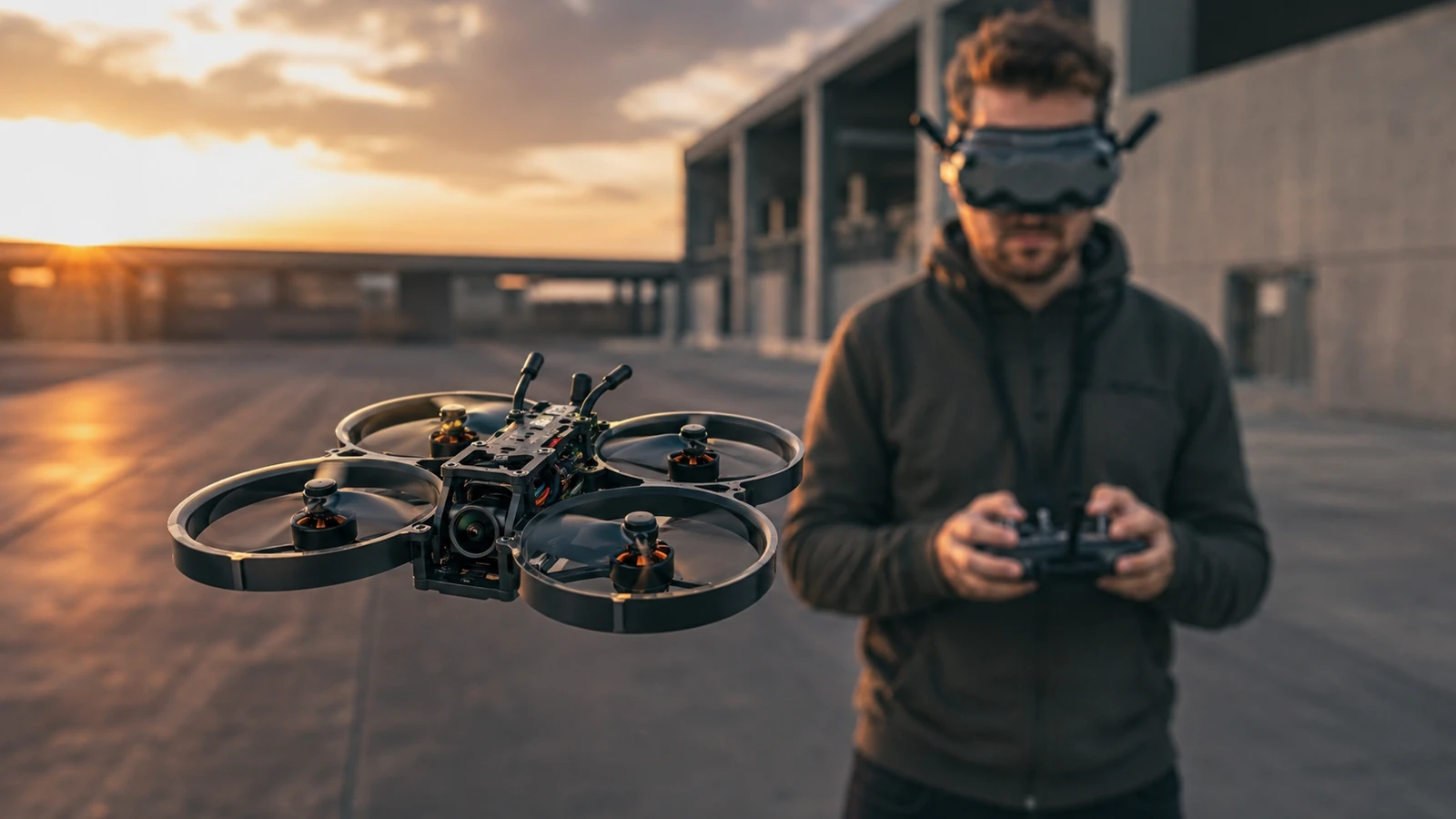
The pilot receives low-latency video on goggles or a dedicated display and controls the aircraft from his or her perspective. Response, link and training are part of the system.
A cinewhoop prioritizes close shots with protected propellers; a micro-whoop allows practice in contained spaces; a freestyle rig offers power and manual control. Racing optimizes speed and circuit.
Some mini drones call FPV to see the camera on the mobile. It's live video, but its latency, control and ecosystem are not equivalent to a dedicated FPV system.
Start with the exact model documentation, not the family name. Check which mode, accessory or feature is available on that variant and under what conditions. A maximum figure is used for comparison; To plan you also need its limits, the configuration used and the margin required by your environment.
It then tests the coherence of the entire system: aircraft, controller, batteries, storage, application, spare parts and workflow. If a compatibility is missing or the source does not distinguish between packs, keep it pending. This discipline avoids paying for a capability you can't use or building an operation on an ambiguous promise.
Draw two links separately: video between camera, transmitter and glasses; control between radio and receiver. Add protocol, version, bands and connectors. A partial brand match does not guarantee that all components can be linked.
The battery is also part of the system: cell number, capacity, discharge rate, connector and charger limits must match. An error here is not a simple loss of benefits. Follow the manufacturer's instructions and treat LiPos with a specific charging, transporting and storage routine.
Estimate simulator, propellers, frames, tools and repairs. The initial goal is not to fly far or fast, but to repeat basic maneuvers with control and set up a consistent failsafe before adding complexity.
In what is a real fpv drone, a good decision does not come from a single specification. First define the result you are looking for, identify the capacity that makes it possible and then check its limits in the real environment. Only then does it make sense to compare models or accessories.
Camera, VTX and glasses. Check what it provides, under what conditions it works and what limitation can change your decision.
Radio, receiver and failsafe. Check what it provides, under what conditions it works and what limitation can change your decision.
LiPo, connector and charger. Check what it provides, under what conditions it works and what limitation can change your decision.
Simulator and progression. Check what it provides, under what conditions it works and what limitation can change your decision.
Start with a simulator and a coherent kit. Compatibility between goggles, radio and receiver matters more than buying the most powerful aircraft.
Shields help near surfaces, but do not eliminate risks. Adjust power, spacing, observer and trajectory before recording.
You need manual control, repair, failsafe configuration and safe management of LiPo. The cost includes spare parts and learning time.
Look for an exact model name, variant and package contents. Separate the confirmed features from the general promises and assess the cost of the complete system: batteries, control, storage, protection, spare parts and really necessary accessories.
If two products do not solve the same use, they are not comparable even if they have a similar price. If an essential piece of information does not appear in the variant documentation, consider it pending and not an advantage.
If a decision depends on the specific location, the marking of the drone or the type of operation, always confirm the case with CAA and CAA airspace alerting guidance before taking off.
Three models to continue the comparison with the criteria you just reviewed.
Editorial selection. Links to Amazon are affiliate links; confirm model, seller, availability and variant before purchasing.
 EDITORIAL REPRESENTATION
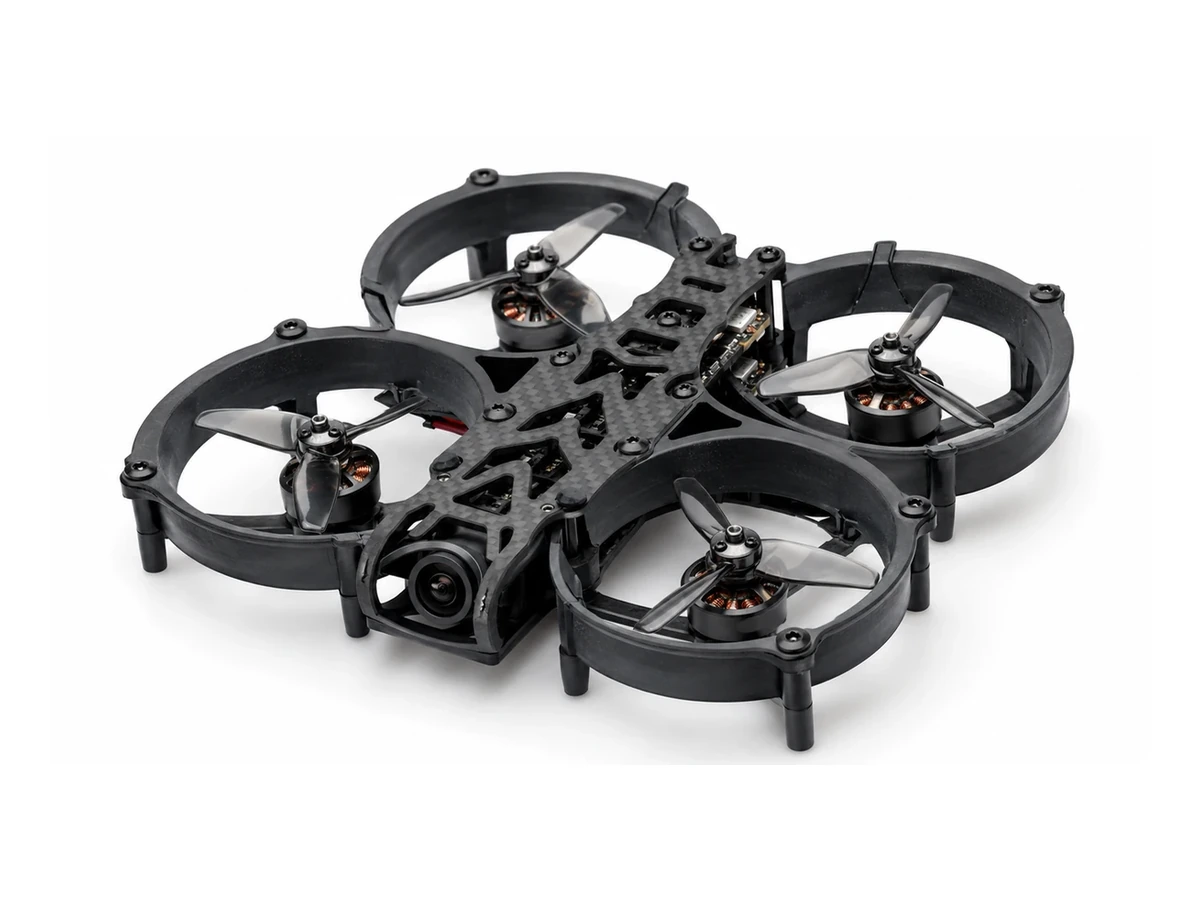
DJI Avata 2 aimed at fpv flight and immersive image. Compare weight, camera, stabilization, security and exact contents of the pack before deciding.
Add to comparison →Check the exact variant before buying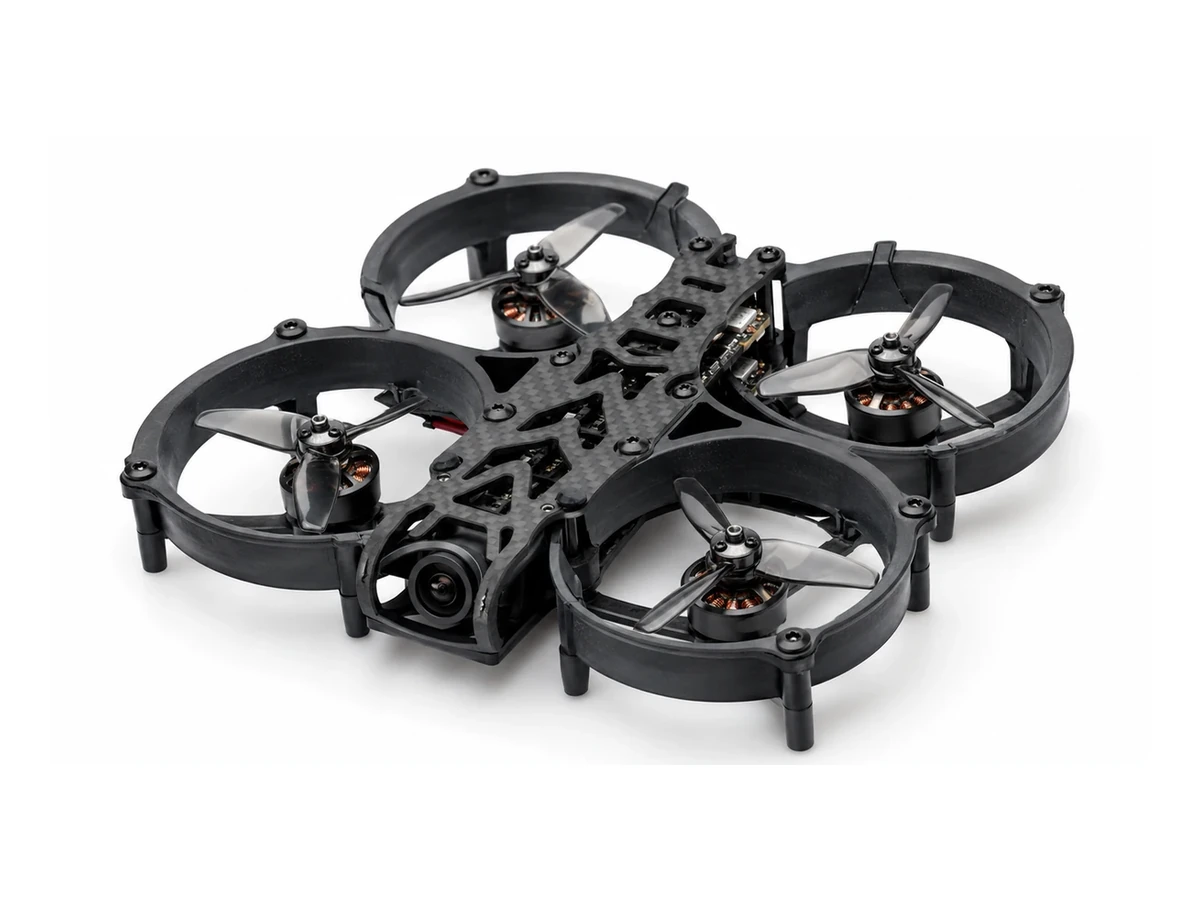 EDITORIAL REPRESENTATION
BETAFPV Aquila20 HD FPV Kit aimed at first flights and supervised learning. Compare weight, camera, stabilization, security and exact contents of the pack before deciding.
Add to comparison →Check the exact variant before buying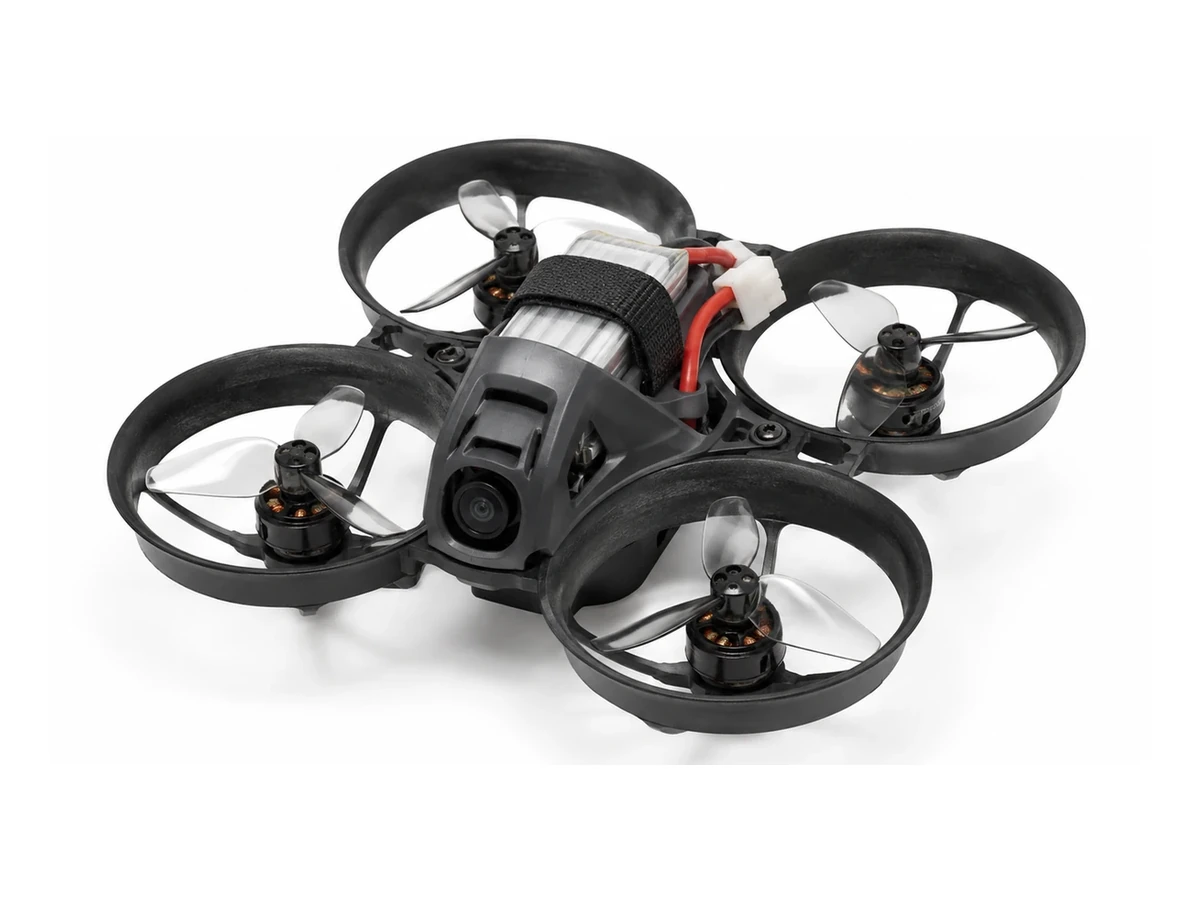 EDITORIAL REPRESENTATION
BETAFPV Air65 aimed at fpv flight and immersive image. Compare weight, camera, stabilization, security and exact contents of the pack before deciding.
Add to comparison →Check the exact variant before buying